

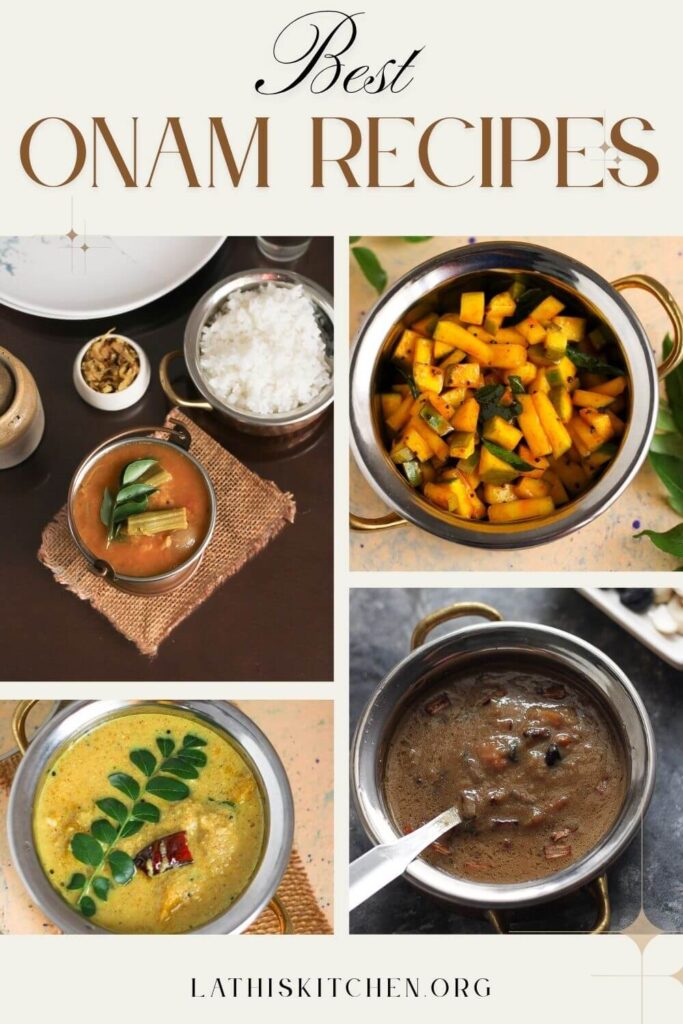
Looking for the best Onam recipes to prepare a traditional Kerala Sadhya? You are in the right place. This collection includes authentic Kerala dishes like Avial, Kootu Curry, Pachadi, Erissery, Payasam, Pickles, and more. Whether you’re planning a complete Onam Sadhya menu or searching for individual Kerala recipes, you’ll find everything you need here.
Onam
Onam is Kerala’s biggest festival — ten days of boat races, flower rangoli (Pookalam), and, at the center of it all, a feast big enough to feed the whole family off a single banana leaf. If you’ve ever wondered what actually goes into a traditional Onam Sadhya, here’s your answer: a minimum of 24–28 dishes, from tangy pickles and crisp banana chips to a lineup of curries, and it all closes on a sweet note with at least three kinds of payasam.
This roundup pulls together every dish you need to build that spread at home — pickles, curries, thoran, and dessert, all in one place. Whether you’re cooking your first Sadhya or filling in the one or two dishes you’re missing this year, jump to whatever you need below.
Collection of Onam recipes
Starters
Mango Pickle
No Sadhya is complete without a good pickle, and this instant mango pickle is the one I make on repeat. There’s no waiting time for fermentation, so you can make it the same morning and have it on the table within the hour. The sharp, spiced tang cuts through the richer curries and is what most people reach for first on the leaf.


Paruppu Vada ( Channa dal Fritters)
Paruppu Vada is the crispy, savory fritter that shows up on nearly every Sadhya leaf — made from protein-rich chana dal, ground coarse and studded with curry leaves and green chili. I make mine in the Air Fryer for a lighter version. You can either air fry for a healthier version or deep fry the traditional way.


Curry
Sambar
Sambar is the main curry of the Sadhya, and this Palakkad-style version made with roasted coconut is the one I always come back to. It’s traditionally eaten with rice, but it’s just as good spooned over idli or dosa if you have leftovers the next day. Make a big batch as it keeps well in the fridge for 2–3 days.

Kalan
Kalan is a yogurt-based curry with yam and plantain. You can use both or either of them.

Pineapple Madura Curry
This Pineapple Madhura Curry is a dish from Kerala which is a must on special occasions. This curry is so easy to prepare and requires only minimal ingredients. This curry has a sweet and sour taste which is unique about this dish.

Mambazha Pulissery
Mambazha pulissery is a traditional Kerala dish from South India. It is a sweet and tangy curry made with ripe mangoes, yogurt, and coconut. The dish is known for its unique combination of flavors and is often served as a part of the traditional sadya.


Pineapple Rasam
Rasam is the digestive served at the end of the meal, and this pineapple version is my favorite twist on the classic tomato-based one. The sweetness of pineapple against the tang of tamarind and the kick of pepper makes it lighter and brighter than a standard rasam. Serve it last, after the curries in a small bowl on its own or spooned over rice is traditional either way.

Side dishes
Kootu Curry
Kootu curry combines yam, plantain, and channa dal into a thick, hearty side that rounds out the protein on the leaf. It’s drier than most of the other curries in the spread, which makes it a good textural contrast next to something saucier like kalan or pulissery. Roasted coconut and cumin stirred in at the end gives it its signature depth.

Inji Kichadi
The Kichadi is a raw preparation with yogurt and coconut sauce. The Inji kichadi is made with ginger which helps with indigestion.

Pumpkin Erissery
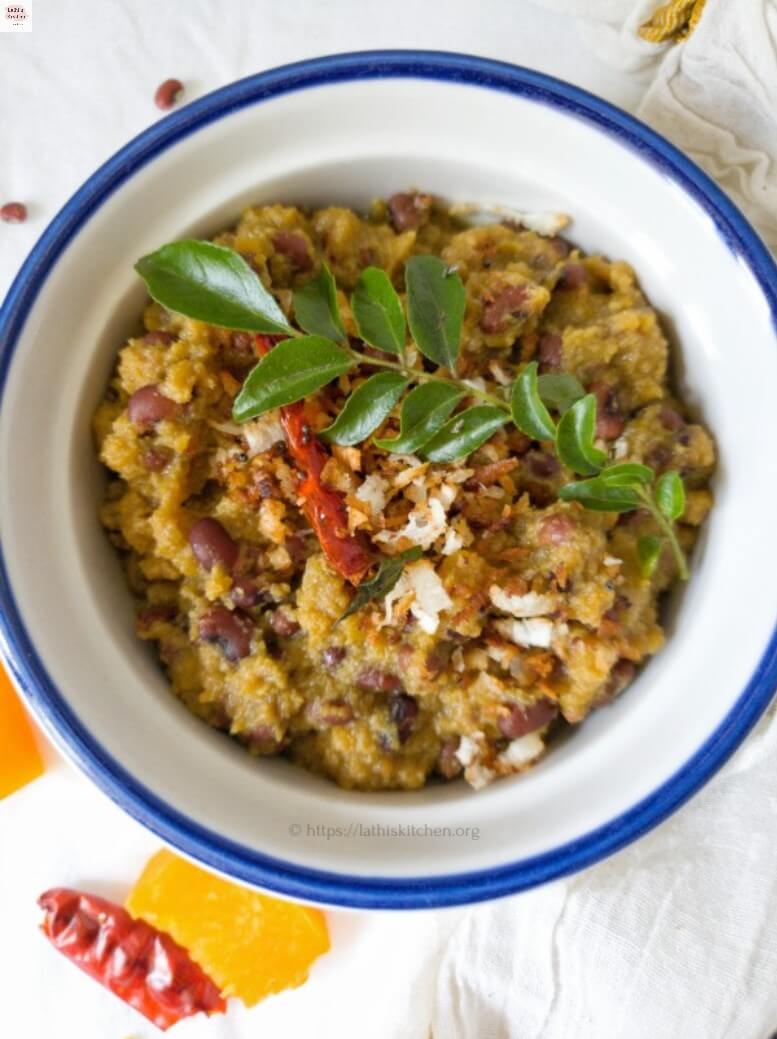
Erissery is a coconut-based curry that’s traditionally made with pumpkin and cooked dried beans (usually red cowpeas), finished with a coarse-ground coconut-cumin paste and a tempering of coconut oil, mustard seeds, and curry leaves. It’s one of the sweeter, earthier curries on the leaf, balancing out the sharper pickles and tangier pachadis elsewhere in the spread. The dried beans add texture and protein, so it holds its own as a side even without rice.

Aviyal
Aviyal is the dish most people associate with Kerala cuisine, and it’s non-negotiable on the Sadhya leaf. Mixed vegetables are cooked in ground coconut and a touch of yogurt, finished with a drizzle of raw coconut oil and curry leaves right before serving — that last step is what gives it the distinct aroma. It pairs with almost everything else on the plate, which is why it usually sits at the center of the leaf.


Beetroot Thoran
Beetroot has many health benefits. They are highly nutritious. Try this simple stir fry to have along with your lunch.


Cabbage Thoran
Cabbage Thoran is one of the simplest sides on the Sadhya leaf — shredded cabbage stir-fried quickly with grated coconut, mustard seeds, and curry leaves until just tender. It’s a good palate reset next to the richer curries like Aviyal or Kalan, since it stays light and doesn’t compete for attention.

Dessert
Chakka Pradhaman
Chakka Pradhaman using Chakka Varatiyathu is a traditional Kerala dessert cooked with jackfruit preserve, coconut milk, and ghee. It is the easiest way to enjoy the most loved festive dessert without waiting for jackfruit season. Every spoonful of Chakka Pradhaman carries the essence of Kerala’s culinary heritage, making it a must-try dish for Onam.

Kadala Paruppu Payasam
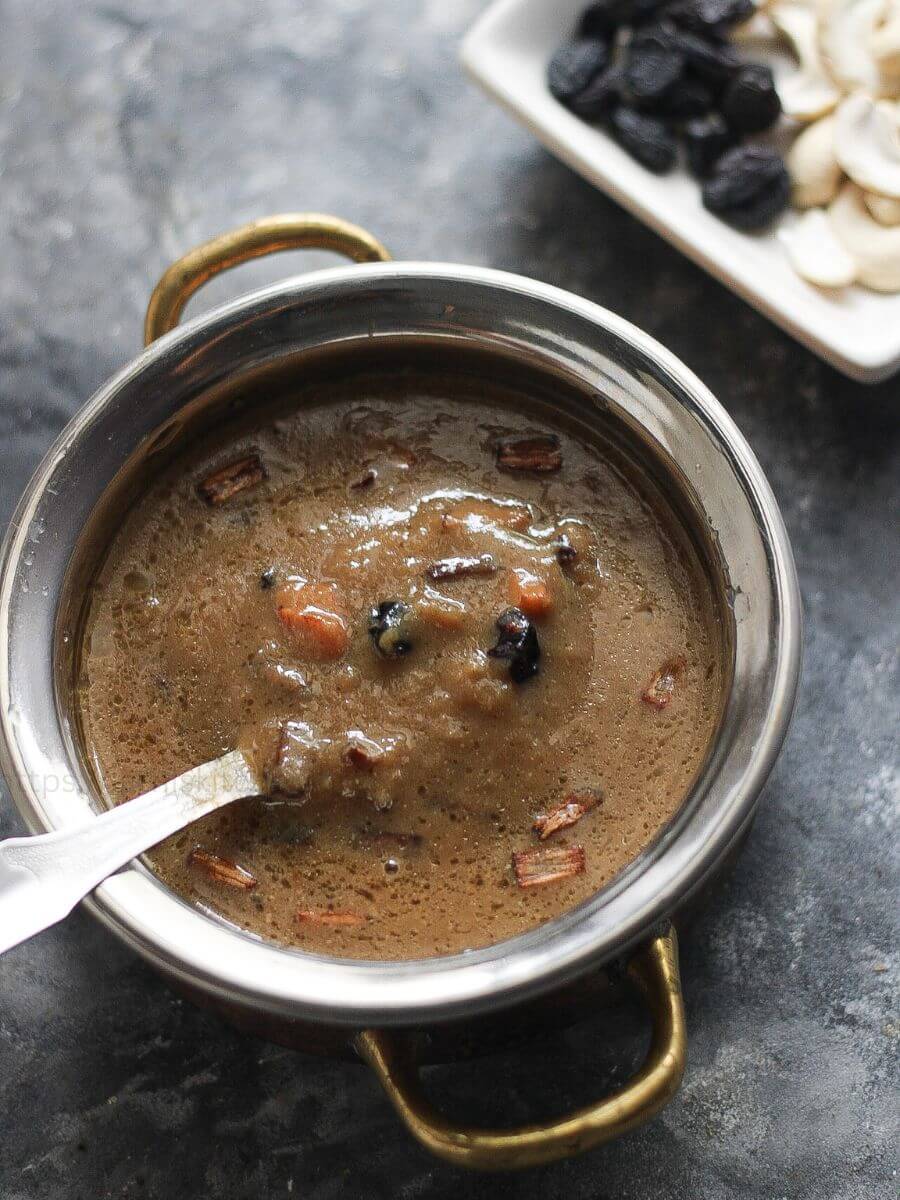
This payasam is made from roasted chana dal (kadala paruppu) simmered down with jaggery and coconut milk until it turns a deep, nutty brown. It’s earthier and less sweet than the more common vermicelli or rice payasams, which is exactly why it’s often the first one served — the palate isn’t overloaded yet. A Sadhya traditionally closes with at least three payasam varieties, so pair this with something lighter like Vermicelli Payasam to round out the trio.

Vermicelli Payasam
Semiya payasam is the dessert most people expect to see closing out the meal, made with just a handful of pantry ingredients — roasted vermicelli, milk, sugar, and cardamom. I’ve included both a stovetop and Instant Pot method, so pick whichever fits your timeline on the day. A Sadhya traditionally closes with at least three payasam varieties, so this one pairs well alongside the kadala paruppu payasam above.


Frequently asked questions
A traditional Onam Sadhya has a minimum of 24–28 dishes, served on a
banana leaf. It typically includes rice, several curries, thoran
(stir-fries), pickles, pappadum, banana chips, and at least three
varieties of payasam to close the meal.
The meal starts with rice paired with a curry like sambar or
parippu, alongside sides such as pappadum, banana chips, and pickle.
Curries are added through the meal, and it traditionally ends on a
sweet note with payasam.
Yes. A traditional Onam Sadhya is entirely vegetarian, built around
rice, vegetables, legumes, and coconut-based curries.
Many items hold up well made a day ahead — pickles, banana chips,
and payasam all keep or even improve with a day’s rest. Curries like
sambar, kalan, and thoran are best made the morning of or the night
before and reheated gently.
Follow me on Facebook, Pinterest, and Instagram to get updates on new recipes.




What a great collection, Lathi. I’ll be sure to refer to it anytime I need an Onam recipe. Thanks!
Thank you Angie, will be glad if it helped you
Thank you for sharing all of these recipes and teaching me about Onam. I hope the people in Kerala do come back strong.
Thank you Mikaela,hope the recipes can be useful for you
What a collection of recipes! I felt like I was able to drink in, if just for a few minutes some of your cultures so I love that you explained a little about the feasting! I see so many recipes that I would love to try. Thanks for the roundup and thanks for bringing it to Fiesta Friday!
Mollie
So glad that it helped Mollie, thank you 😊
Lovely Collection Lathi and Thank you for including my humble recipe as well. Wishing you and all your loved ones a very happy and prosperous Onam.
Thank you Vidhya..Happy Onam to you and your family
Wow what a collection, just right to make up the whole Onam sadya. Our prayers goes out to all those who are suffering because of the floods in Kerala.
Thank you Mayuri